
“AI’s speed isn’t saving you money. A brand that blends in is costing you your bottom line.”
Speed shouldn’t cost you specificity. AI has made it faster than ever to produce a flyer, a social post, or a full campaign. And for ministries and small businesses running on tight budgets and tighter timelines, that speed is genuinely valuable. But there’s a difference between using AI to move faster and letting it quietly erode the brand you’ve spent years building. And this isn’t just an aesthetic problem. A diluted brand is a financial one: it shows up in lower attendance, fewer repeat customers, and weaker word of mouth, even when nobody can point to exactly why. Here are five signs that shift has already started, and what each one is actually costing you.
1. Everything Is Starting To Look Generic
Your visuals are polished, but they could belong to almost any organization. This is usually the first sign, and the easiest to miss, because nothing looks wrong on its own. Each graphic is clean, on-trend, and professional. The problem only shows up when you step back: nothing about it says *you* specifically. A flyer that could just as easily promote a different church, a different shop, a different event isn’t doing the one job branding is supposed to do: make you instantly recognizable. And recognition isn’t a frivolous nicety; it’s what shortens the distance between someone seeing your name and deciding to show up or buy. Generic visuals make that distance longer every time.
2. Your Brand Changes With Every Prompt
Colors, typography, imagery, and tone shift depending on who generates the content and what they typed into the prompt box. One week the palette leans bright and playful, the next it’s muted and corporate, not because the brand evolved, but because a different person ran a different prompt. Real brand consistency comes from a maintained system: defined colors, defined type, defined voice, applied the same way every time. AI without that system doesn’t maintain a brand; it improvises a new one on every request. Every inconsistent post is a small withdrawal from the trust account you’ve spent years building. Customers and congregants may not consciously notice subtle shifts in the brand, but the inconsistency reads as a lack of polish. That’s the feeling that quietly shapes whether they take you seriously enough to return.
3. Nobody Can Explain the Choices
The answer to “why this?” becomes “because it looked good.” That’s a meaningful shift. A strong brand isn’t built on things that merely look good; it’s built on decisions being made for specific reasons: this color because it reflects the mission, this typeface because it feels approachable instead of corporate, this layout because it tested well with the audience you’re trying to reach. When “it looked good” becomes the only justification anyone can offer, the brand stops being a system of intentional choices and starts becoming a series of guesses. Guesses cost money in a way strategy doesn’t. Every piece built without a reason behind it is a piece you can’t confidently repeat, test, or improve on, which means you’re paying for content without building an asset.
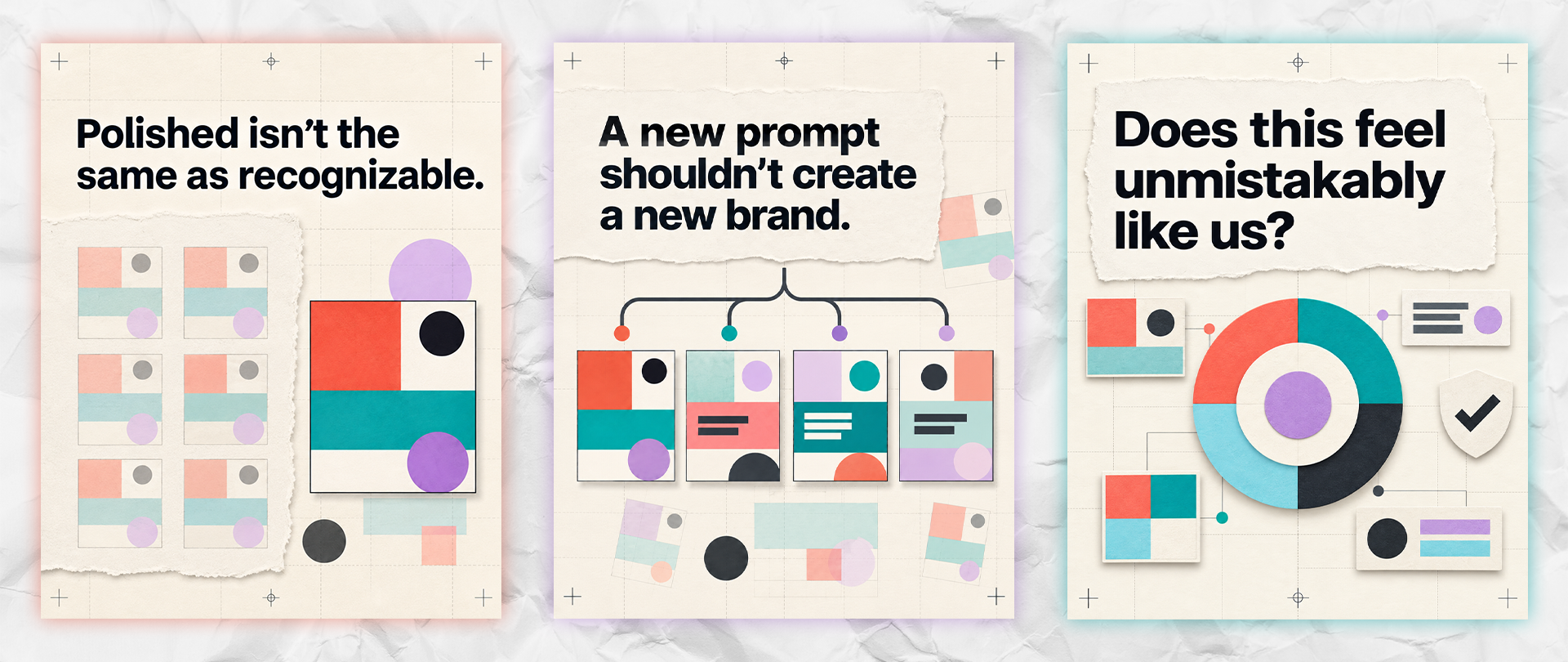
“AI without that system doesn’t maintain a brand, it improvises a new one on every request.”
4. You’re Copying the Past, Not Carrying It Forward
AI mimics previous work without understanding the decisions or history behind it. It can look at last year’s flyer and produce something that resembles it, but resemblance doesn’t constitute continuity. AI doesn’t know why a certain shade got retired, why a phrase never makes it into your event copy, or why the layout leaves extra breathing room around the header. It’s pattern-matching a look, not carrying forward the reasoning that built the look in the first place. Over time, that gap between imitation and understanding is exactly where a brand starts to drift, and drift is expensive to correct. It’s far cheaper to protect a brand’s continuity now than to pay a designer later to diagnose why the brand no longer feels cohesive and rebuild what quietly slipped away.
5. Recognition Is Getting Weaker
Individual graphics may look attractive, but together they no longer feel like one brand. This is the sign that matters most, because it’s the one your audience actually notices, even if they couldn’t articulate it. People don’t consciously analyze your typography or your color palette. They recognize a familiar look the way they recognize a familiar voice, instantly and without thinking about it. When that recognition weakens, so does the trust that comes with it. For a ministry or small business that runs on repeat visitors, word of mouth, and community trust, that’s not a cosmetic problem. It’s the whole relationship at stake, and relationships are what drive repeat attendance, referrals, and revenue for organizations that can’t outspend bigger competitors on advertising.
Consumers Are Starting To Notice
This isn’t just a designer’s complaint. Consumers are starting to push back on brands that lean on generic, run-of-the-mill AI content, and that pushback is exactly why this matters financially and not just aesthetically. People can tell when something was made in five minutes with a prompt instead of with care. Now, many consumers are choosing not to spend money with brands that skip care.
I recently saw the alternative firsthand. I went to a new Mediterranean restaurant with my best friend. While we were there, I noticed a videographer working the room, capturing staged shots of the food alongside candid moments of the restaurant itself. In a landscape saturated with AI-generated content, it was genuinely refreshing to watch someone put real effort into showing what the place actually looked and felt like. That kind of investment stands out precisely because it’s becoming rare, and it signals something to a customer before they’ve even tasted the food: this restaurant cares enough to show up authentically. That’s the exact opposite of what a generic AI flyer communicates, and diners are starting to reward the difference.
“AI should accelerate your brand, not erase what makes it recognizable.”
Where That Leaves You…
AI should accelerate your brand, not erase what makes it recognizable. None of these five signs mean AI has no place in your process. Used well, it’s a genuinely useful collaborator for moving faster through the mechanical parts of design. Used without oversight, it quietly replaces the judgment that made your brand feel like *yours* in the first place, and that judgment is doing real financial work you don’t see on an invoice.
Before you publish anything AI helped create, ask one simple question: does this feel unmistakably like us? If the honest answer is no, take a pause, even when the deadline is tight. In the long run, AI’s speed isn’t saving you money, it’s creating a generic brand that is costing you your bottom line.
If you’re not sure where your brand stands, or you want a second set of eyes before AI touches anything else with your name on it, let’s talk. Book a branding consultation, and we’ll take a look together.